

Johnny S. reported his wife would get upset with him about having the meetings at their home all the time and Johnny S. suggests that C.A. needs a group like Al-Anon and that she should start it.
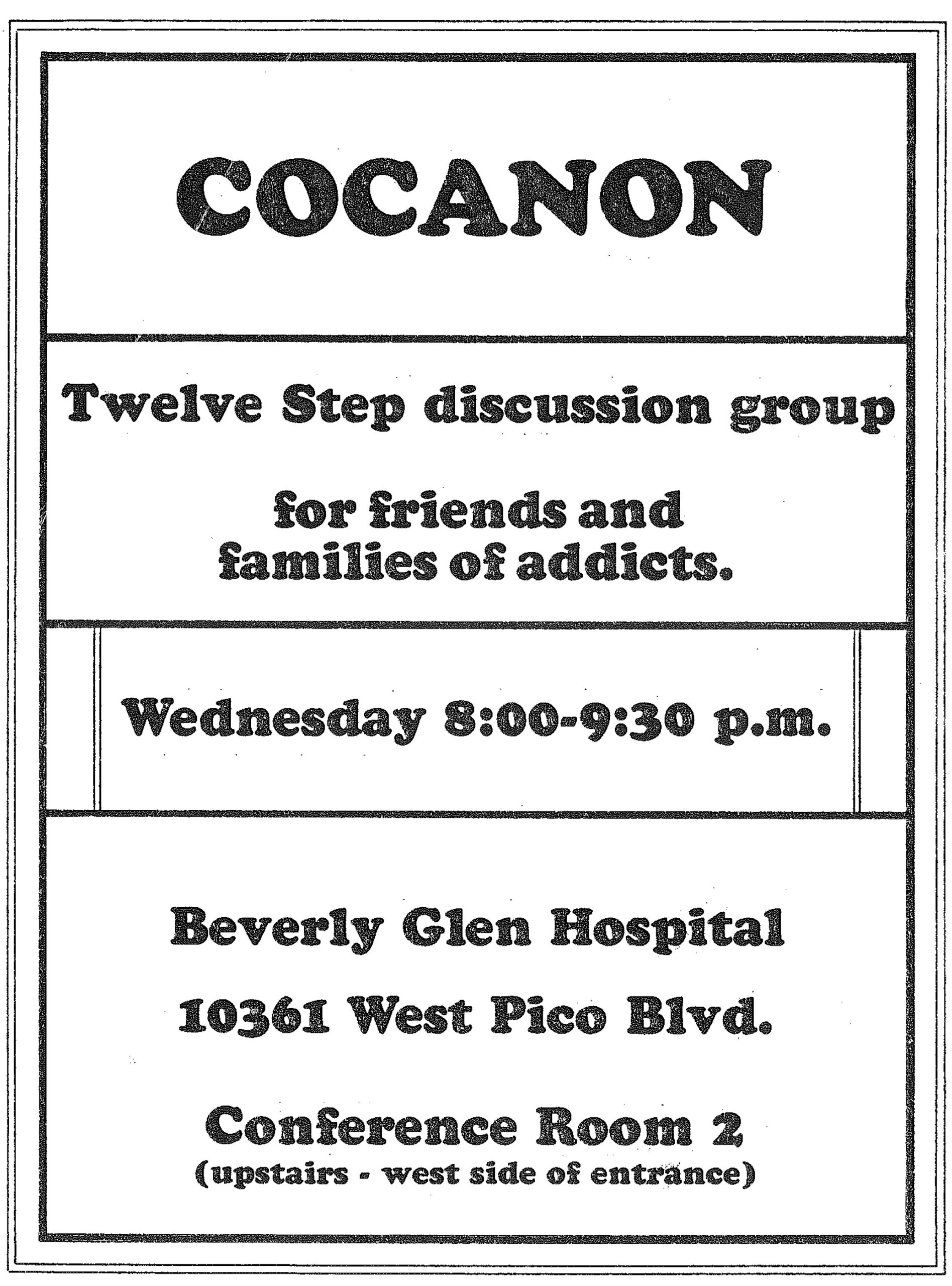
Sometime during the second year (1983) of C.A., Co-Anon was started by Johnny S.’s wife, Janine P. along with Chaz and Yehuda. It was initially named CocAnon but later on the there was expressed confusion about the name…many thought it meant Cocaine Anonymous. So the early members renamed the early organization to Co-Anon Family Groups and designed a new logo which was created by Chaz.
Johnny S. (CA) and his Wife, Janine (CoAnon)
Audio Summary
This audio features two speakers, Janine and Johnny, sharing their personal journeys through addiction and recovery, focusing on the impact of substance abuse on relationships and family life. Janine represents the Coconut Family Group, a support network for family and friends of cocaine addicts, while Johnny shares his story as an addict and alcoholic in recovery. The central theme revolves around understanding addiction as a disease, the challenges of loving and living with addicts, and the transformative power of support programs like Coconut, Al-Anon, and Cocaine Anonymous. The audio highlights the struggles, growth, and acceptance involved in recovery, illustrating how these programs foster honesty, dignity, and mutual respect. It is highly suitable for individuals affected by addiction, either personally or through loved ones, and offers lessons in coping strategies, emotional boundaries, and the importance of self-care within the journey of recovery.
- Janine’s Introduction and Family Background
Janine introduces herself and describes her early life in London, her brother’s drug addiction, and the effects of growing up surrounded by drug problems. She shares how her relationships involved partners struggling with addiction or alcoholism, leading to emotional turmoil and attempts to control their behaviors.
- Janine’s Relationship with Johnny and Journey to Recovery
Janine discusses meeting Johnny, their intense relationship, and the worsening impact of his addiction on their lives. She recounts her struggle with enabling behaviors, emotional devastation, and how joining Al-Anon and Coconut Family Group helped her learn to take care of her own life and understand addiction as a disease.
- Janine on Growth, Compassion, and Program Impact
Janine reflects on how working the program’s steps has taught her to let go of control, respect others’ dignity, and develop compassion. She describes the growth in her friendship with Johnny post-separation and her embracing a Higher Power as foundational to her current stability.
- Transition to Johnny’s Story
She concludes her talk with gratitude to the convention organizers and introduces Johnny, who begins sharing his perspective.
- Johnny’s Addiction, Meeting Janine, and Early Sobriety
Johnny shares his struggles with multiple drugs, numerous rehab stays, and failed relationships centered on addiction. He recalls first meeting Janine, their quick deep connection, and how his addiction continued to dominate their relationship. He underwent a detox and began the recovery process, experiencing fear but also hope.
- Johnny’s Challenges in Sobriety and Relationship Dynamics
He narrates early conflicts and fears in sobriety, including a pivotal fight and his attempts to express his troubles honestly. Johnny describes the breakthrough moment when Janine told him she would never try to control his addiction, lifting a burden and ending their destructive games. He speaks about their marriage, eventual separation, and how the program helped both grow into different, healthier people.
- Reflections on Recovery, Honesty, and Program Promises
Johnny discusses his personal growth, the importance of honesty and love in recovery, and the lessons learned from recognizing and accepting failures. He stresses the unity and support found in the program, and how it enables living a sober and purposeful life.
- Closing Remarks and Reading of the 12 Promises
The session concludes with a short announcement and reading the Twelve Promises of Cocaine Anonymous, underscoring the hope, comfort, and transformation that recovery promises to those who work the program.
Key Points
- 🎯 Janine’s experience illustrates how addiction impacts the entire family, not just the individual, emphasizing the importance of support groups like Coconut for loved ones.
- 🎯 Addiction is described as a disease, not willpower failure; the struggle to control others often causes emotional harm to family members.
- 🎯 Both Janine and Johnny highlight the necessity of surrendering control and learning to focus on one’s own recovery journey through program steps.
- 🎯 Recovery involves honesty, compassion, and mutual respect, which can transform even relationship struggles into growth opportunities.
- 🎯 The 12-Step programs are communal and spiritual paths fostering acceptance, serenity, and practical tools for managing life with addiction.
Key Insights
- Insight 1: The realization that one cannot control another’s addiction is a pivotal step toward emotional healing for family members (Janine, ).
- Insight 2: The mutual journey of recovery can shift a relationship from chaos to friendship built on respect and honesty, even if separation occurs (Janine and Johnny, ; ).
- Insight 3: Early sobriety brings unexpected fears and challenges; recognizing them and seeking support is crucial (Johnny, ).
- Insight 4: Open communication about struggles, without blame, enables breakthroughs in relationships during recovery (Johnny recounting his midnight confrontation, ).
- Insight 5: The 12 Promises serve not as guarantees of external success but as internal transformations toward peace and freedom (Chuck, ).
Frequently Asked Questions (FAQs)
- Q: What is the Coconut Family Group?
A: A support group for family and friends of cocaine addicts, using adapted 12-step principles parallel to Cocaine Anonymous, helping loved ones understand addiction and their role.
- Q: How can family members stop feeling responsible for an addict’s recovery?
A: By learning that addiction is a disease they cannot control, focusing instead on their own healing and accepting that they can only control their own behavior.
- Q: What is the importance of working a recovery program alongside an addicted loved one?
A: It allows each person to grow independently, maintain boundaries, and cultivate understanding and respect, essential for personal and relational healing.
- Q: How do the 12 Promises relate to real-life recovery outcomes?
A: They highlight internal gains like serenity, freedom from fear, and self-acceptance, rather than guarantees of external factors like marriage or wealth.
- Q: How can honesty and openness improve relationships during recovery?
A: Truthful communication about needs and struggles helps build trust, reduces enabling behaviors, and supports mutual growth.
Conclusion
This audio deeply explores the intertwined journeys of addiction and recovery from the perspectives of an addict and his partner. It reveals that addiction affects entire relational systems, and traditional notions of control must give way to acceptance and self-care. Both Janine and Johnny emphasize that recovery is a gradual, challenging process that requires honesty, compassion, and willingness to change. Programs like Coconut Family Group, Al-Anon, and Cocaine Anonymous provide essential frameworks and communities for this growth. The key message is that recovery offers not just sobriety but profound personal transformation and healthier relationships, achievable by working the program one day at a time. Viewers engaged in similar struggles are encouraged to seek supportive groups, embrace the surrender of control, and prioritize their own healing while maintaining compassion for their loved ones.